



Gross & Son Paint & Body Shop
November 23, 2026
Key Takeaways
- In the ceramic coating vs wax debate, the real difference is time: wax protects for weeks; a professional ceramic coating protects for years.
- Wax sits on top of your paint and wears away. Ceramic coating chemically bonds to the clear coat and becomes part of the surface.
- Expect $800 to $3,000 for professional ceramic coating versus pocket change for a tin of wax, but compare cost per year of protection, not sticker price.
- Pensacola’s UV, salt air, and summer heat break down wax in a fraction of its advertised life, which tilts the math toward coating on the Gulf Coast.
- Ceramic coating benefits include UV resistance, chemical protection, and a hydrophobic surface that keeps the car cleaner between washes.
- Wax still has its place: short-term ownership, show-day shine on classics, and budgets where something beats nothing.
Ceramic coating or wax? If you’ve stood in an auto parts aisle or scrolled a detailing page wondering whether the old faithful tin of wax still cuts it, or whether this ceramic stuff is worth the hype, this one’s for you. We get asked the ceramic coating vs wax question at the shop just about every week, usually by someone whose last wax job disappeared somewhere around the third summer thunderstorm.
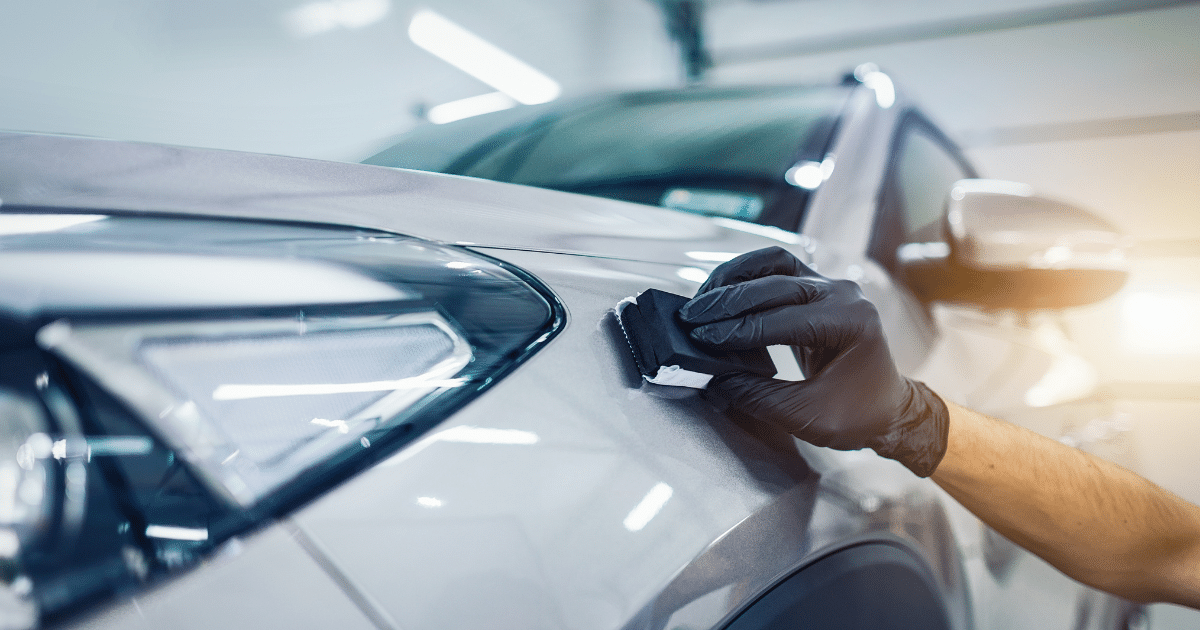
Here’s the honest framing before we get into the details. Wax and ceramic coating are trying to do the same job, which is putting a sacrificial layer between your paint and the world. The difference is how they do it and how long they last. Wax sits on top of the paint and wears away. A ceramic coating is a liquid polymer that chemically bonds with the clear coat and cures into a hard, semi-permanent layer. One is a raincoat you keep re-buying. The other is closer to a second skin.
Around here, that difference gets magnified. The same Gulf Coast conditions that make Pensacola worth living in are quietly brutal on paint protection, and they don’t treat wax and ceramic equally. More on that below.
In this post, you’ll learn:
- How wax and ceramic coating compare side by side
- What each costs up front and per year of protection
- Why our coastal, high-UV climate is especially hard on wax
- When wax is still the right call
Ceramic Coating vs. Wax: The Side-by-Side
| Carnauba / Synthetic Wax | Professional Ceramic Coating | |
|---|---|---|
| How it protects | Sits on top of the paint as a soft sacrificial layer | Chemically bonds to the clear coat and cures hard |
| Durability | Weeks to about 3 months, less in Gulf heat | 2 to 7 years with proper maintenance |
| Cost | Inexpensive product, modest cost per application | $800 to $3,000 applied professionally |
| Application | An afternoon in the driveway | Multi-day professional process with paint prep |
| UV protection | Mild and short-lived | Strong, lasts the life of the coating |
| Water behavior | Beads at first, fades fast | Aggressively hydrophobic for years |
| Maintenance | Reapply every 4 to 8 weeks | Wash properly, booster spray a few times a year |
That table is the whole argument in miniature. Now let’s break down the four factors that actually decide it.
Durability
This is the knockout round. A quality wax looks wonderful for a few weeks, and in a mild climate might stretch toward three months. A professionally applied ceramic coating delivers what The Drive calls multi-year paint protection, and the premium coatings we apply are rated for up to seven years. To match one coating’s lifespan, you’d wax the same car thirty or forty times.
Cost
Wax wins the sticker-price contest by a mile, and it isn’t close. A tin of good wax costs less than dinner for two. Professional ceramic coating runs $800 to $3,000 depending on vehicle size, paint condition, and coating tier. But flip the math to cost per year: a $1,500 coating that lasts five years costs $300 a year, no labor, no Saturday afternoons. Forty wax applications, whether in product and your time or in paid detailing visits, adds up to real money for protection that spends most of its life half worn off.
Application
Anyone can wax a car in the driveway, and there’s something to be said for that. Ceramic coating is a different animal: the paint has to be washed, decontaminated, usually machine-corrected, and then coated in a controlled environment and allowed to cure. That’s why it’s priced like skilled labor. It is skilled labor, and it’s also why the results don’t compare.
Protection Level
Wax offers mild, short-lived resistance to UV and contaminants. A cured ceramic coating shields against UV fading, bird droppings, bug acids, tree sap, and the salt film that settles on everything within a few miles of the water. It also resists the light wash-marring that puts swirls in soft wax finishes. Neither one stops rock chips or door dings, so keep expectations realistic: this is about surfaces, not armor.
Why Wax Loses Faster in Pensacola Than Almost Anywhere
Wax’s biggest enemies are heat, UV, water, and detergent. Pensacola supplies all four in bulk.
Summer here routinely pushes the UV index to 8 and above, a range the EPA classifies as very high to extreme. UV breaks down wax quickly, and our heat softens it so it sheds even faster. Then every afternoon storm rinses a little more off, every salt-air morning deposits contaminants onto it, and every wash strips another layer. A wax that claims three months of protection on the label is often doing very little by week four or five on a Pensacola driveway car.
A ceramic coating simply doesn’t care about most of that. It’s UV-stable, it doesn’t soften in heat, washing doesn’t strip it, and its sealed, slick surface gives salt and grime nothing to grab. That’s the core of the ceramic coating benefits story on the Gulf Coast: the protection is still fully there in year three, not mostly gone by Labor Day.
That’s also why our answer to “which one?” changes with geography. Inland, wax is a reasonable habit. Within salt air’s reach, coating is the one we’d put on our own cars, and we covered the full value case in our guide to whether ceramic coating is worth it.
When Wax Still Makes Sense
We’d rather be straight with you than sell you the expensive option every time. Wax is still the right call when:
- You’re selling the car soon. No sense coating a car you’ll hand over in six months; a fresh wax before listing photos is plenty.
- It’s a garaged classic. Show cars that see sunny Saturdays and covered storage don’t face the daily assault, and many owners enjoy the waxing ritual itself.
- The budget says so. A $25 wax applied regularly beats zero protection every time. Protection you’ll actually keep up with is the best kind.
- The paint isn’t ready. A coating locks in whatever is underneath it, so paint with heavy swirls or oxidation needs correction first. Wax can bridge the gap until you’re ready to do it right.
If you’re not sure which bucket your car falls into, our automotive detailing team will look at your paint, ask how you use and park the car, and recommend the option that fits, even when that answer is the cheaper one.
FAQs: Ceramic Coating vs. Wax
How much does ceramic coating cost?
Professional ceramic coating costs $800 to $3,000 depending on vehicle size, paint condition, and the coating tier you choose, and that price typically includes the paint prep that makes the coating last. DIY kits run $40 to $170 but don’t match professional durability. Spread over a multi-year lifespan, coating often costs less per year than a steady wax habit.
How long does wax last?
A quality carnauba or synthetic wax lasts anywhere from a few weeks to about three months. In Pensacola’s heat, UV, salt air, and frequent rain, expect the short end of that range, with protection fading noticeably within four to six weeks on a car that lives outside. Regular reapplication is the only way wax stays effective here.
Is ceramic coating better than wax?
For most Gulf Coast daily drivers, yes. Ceramic coating bonds to the paint and delivers years of UV, chemical, and salt protection, while wax wears off in weeks and fades fastest in exactly the conditions Pensacola serves up daily. Wax still makes sense for short-term ownership, garaged classics, and tight budgets.
Do you have to remove wax before applying ceramic coating?
Yes. A coating can only bond to clean, bare clear coat, so all wax, sealant, and contamination must be stripped first, and most vehicles need machine paint correction before coating. That prep is a big part of professional pricing, and skipping it is the main reason DIY coatings underperform.
Can I wax my car while deciding on ceramic coating?
Absolutely, and you should. Wax now protects the paint you’ll eventually have corrected and coated, and it strips off completely during coating prep. The only mistake is doing nothing. Unprotected paint in this climate oxidizes fast, and correction costs rise with every summer the paint goes bare.
Get a Straight Answer for Your Car
Bring your car by, and we’ll tell you which protection actually fits it: your paint’s condition, where it parks, and how long you plan to keep it. This family has been protecting Gulf Coast paint since 1947, and we’re happy to talk you out of the expensive option when the cheap one will do. Schedule a visit with Gross & Son or call (850) 434-5309.
Share This Post