



Gross & Son Paint & Body Shop
November 11, 2026
Key Takeaways
- Paint correction is machine polishing that permanently removes swirls, light scratches, and oxidation from your clear coat, not a product that covers them up.
- A wax hides defects for a few weeks, and a detail cleans the car. Paint correction is the only one of the three that actually removes damage.
- Expect roughly $500 to $800+ for a thorough single-stage correction and $1,000 to $2,000+ for multi-stage work, with quick one-step polishes available for less.
- Pensacola’s UV, salt air, and humidity oxidize paint noticeably faster than inland climates, so Gulf Coast cars need correction sooner.
- Correction fixes defects in the clear coat. Once the clear coat itself is peeling or chalky white, you’re past polishing and into respray territory.
- If you’re searching for paint correction near me in Pensacola, our team at Gross & Son can look at your paint and tell you straight what fix it needs.
If you’ve typed “paint correction near me” into your phone from a Pensacola parking lot, squinting at swirl marks that light up like a spiderweb in our afternoon sun, you’re in the right place. We’ve been looking after Gulf Coast paint at Gross & Son since 1947, and the question behind that search is one we answer in person every week: can this paint be saved, or is it too far gone?
Most of the time, it can be saved, and the fix is more dramatic than people expect. Done properly, a multi-stage paint correction can remove 80 to 95% or more of visible defects, according to professional detailer Ivan Rajic. That’s not “shinier.” That’s a different-looking car.
But paint correction is also one of the most misunderstood services in the car world. It gets confused with waxing, lumped in with detailing, and occasionally sold to people whose paint actually needs a respray instead. So let’s clear all of that up, Pensacola-style.
In this post, you’ll learn:
- What paint correction actually is
- How it differs from a wax or a detail, and why that matters for your wallet
- What paint correction costs and what before-and-after results look like
- Why our Gulf Coast climate eats paint faster, and when correction isn’t enough
What Is Paint Correction, Exactly?
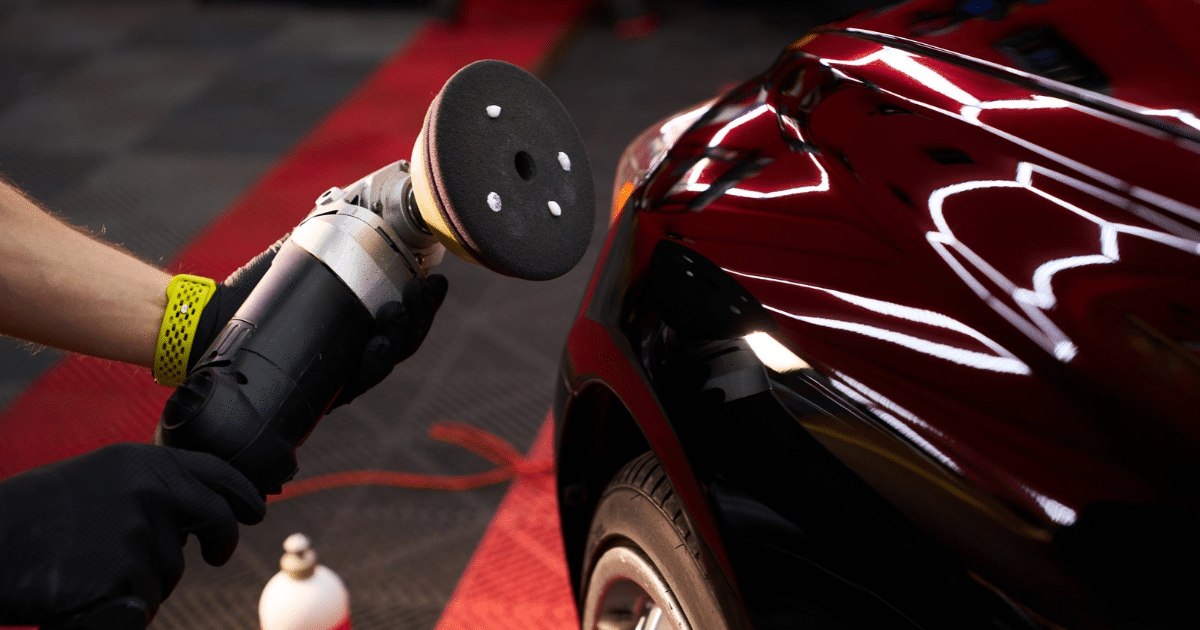
Your car’s color coat sits under a thin, transparent layer called the clear coat, and that clear coat is where almost all the ugly lives: swirl marks from automatic washes, light scratches, water etching, bird dropping stains, and the dull haze of oxidation. Paint correction is the process of machine polishing that clear coat with graduated compounds and pads, physically leveling the surface until those defects are gone.
The key word is removes. Nothing is being filled, glossed over, or hidden. Here’s what correction can and can’t fix:
- Fixes: swirl marks, light scratches, oxidation and fading, water spots, etching from bird droppings and bug splatter, holograms from bad polishing jobs
- Doesn’t fix: scratches deep enough to catch a fingernail, rock chips, peeling clear coat, or dents
Correction is done in stages: a single polishing pass for light defects, a cutting compound ahead of the finish polish for more serious damage, and three or more passes for badly neglected paint. The labor climbs with each stage.
Paint Correction vs. Detailing vs. Wax: What’s the Difference?
This is where most folks get tripped up, and the industry doesn’t help by using the words interchangeably. Here’s the plain-language version:
| Wax or Sealant | Full Detail | Paint Correction | |
|---|---|---|---|
| What it does | Adds a sacrificial protective layer with some gloss | Deep-cleans the whole car, inside and out | Permanently removes defects from the clear coat |
| Effect on scratches | Hides them slightly, temporarily | None, cleaning doesn’t remove scratches | Removes them |
| How long it lasts | Weeks to a few months | Until the car gets dirty | Permanent, for the defects it removed |
| Typical cost | $ | $$ | $$$ |
| Best for | Maintenance between corrections | Regular upkeep and resale prep | Restoring tired, swirled, or oxidized paint |
The three work together rather than compete. A detail cleans the canvas, correction restores it, and wax (or better, a ceramic coating) protects the result. What you want to avoid is paying for wax expecting correction results, or paying for correction and then skipping the protection that keeps it looking corrected.
How Much Does Paint Correction Cost?
Here’s the real range. Quick single-step polishes at some shops start around $150 to $300, and they’re fine for mild haze on a daily driver. A thorough single-stage correction from a shop that preps properly typically runs $500 to $800 or more, and two-stage or multi-stage work runs $1,000 to $2,000+, per industry pricing from Detailed Image. Those bigger jobs can take eight to twelve hours of machine time, which is where the price lives.
What moves your quote up or down:
- Paint condition. Light swirls polish out quickly. Years of Gulf Coast oxidation take hours of cutting.
- Vehicle size. A full-size truck has nearly twice the painted surface of a compact sedan.
- Stages needed. Each additional stage is another full pass over every panel.
- Protection afterward. Adding a ceramic coating costs more up front and is usually worth it, since it keeps you from paying for correction twice.
One thing we tell every customer: be skeptical of a firm price quoted over the phone, from us or anyone else. Until a shop looks at your paint under proper lighting and measures what it’s dealing with, any number is a guess.
Paint Correction Before and After: What to Expect
The before-and-after on a corrected car is the closest thing our trade has to a magic trick. Before: a silver sedan that reads dull gray, swirls glowing in the sun, water spots etched across the hood. After: mirror-flat reflections, color depth back, that wet-paint look that made you buy the car in the first place.
In numbers, a single-stage correction typically removes 50 to 80% of visible defects, and multi-stage work pushes past 90 on most paints. In practice, here’s what changes:
- Reflections sharpen from blurry to mirror-like, especially on dark colors
- Faded, chalky panels get their actual color back
- Swirl “spiderwebs” disappear under direct sunlight, the harshest test there is
- The surface feels glass-smooth instead of rough
One caveat we’d rather tell you now than after: correction removes a microscopic layer of clear coat each time, so it isn’t something to repeat every year. That’s why we recommend sealing corrected paint with a ceramic coating, which protects the finish you just paid for, and it’s why our [ceramic coating guide]([INTERNAL LINK: ceramic coating blog]) is the natural next read after this one.
Why Pensacola Paint Fails Faster
We love it here, but let’s be honest about what this place does to a car. Pensacola summers routinely push the UV index to 8 and above, the range the EPA classifies as very high to extreme. That same sunshine that fills the beaches breaks down the resins in your clear coat, which is how paint goes chalky.
Then the Gulf piles on. Salt air settles into the microscopic pores of your paint and gets to work on oxidation, and our humidity keeps that salt wet and active far longer than it would stay in a dry climate. A car that might show light fading after eight years in Tennessee can show the same damage here in three or four, especially if it sleeps outside.
For Pensacola drivers, that changes the maintenance math:
- Oxidation isn’t an “old car” problem here; we correct five-year-old daily drivers regularly
- Garage-kept and covered cars buy themselves years of paint life
- Regular washes matter more here, because they rinse salt off before it settles in
- Correction plus protection isn’t a luxury on the Gulf Coast; it’s how you avoid a respray
Our automotive detailing team builds maintenance plans around exactly this climate, from wash routines to coating schedules.
When Paint Correction Isn’t Enough: Correction vs. Respray
Here’s the straight talk some shops won’t give you: polishing can only fix the clear coat, not replace it. Once the clear coat itself has failed, no amount of correction brings it back, and anyone who polishes failed clear coat is charging you to make it worse.
You’re past correction and into refinish territory when you see:
- Peeling or flaking, where the clear coat is lifting off in patches
- Cloudy white “burns” that look the same wet or dry, a sign the clear coat is gone through
- Crow’s-feet cracking across the surface
- Primer showing through the color anywhere
The good news is that we’re one of the few shops in the area with both sides of the answer under one roof. As a full collision repair and refinish facility with four downdraft paint booths, we can correct the panels worth correcting and respray the ones that are truly gone, instead of forcing your whole car into one solution. You get one honest assessment and the right fix for each panel.
FAQs: Paint Correction in Pensacola
How do I find good paint correction near me?
Look for a shop that inspects your paint in person before quoting, explains which defects will and won’t come out, and offers protection options for afterward. In Pensacola, ask how they account for salt air and UV damage specifically. Gross & Son has corrected and refinished Gulf Coast paint from the same family shop since 1947.
How much does paint correction cost?
Quick one-step polishes start around $150 to $300, a thorough single-stage correction typically runs $500 to $800 or more, and multi-stage work runs $1,000 to $2,000+. Final pricing depends on your paint’s condition, vehicle size, and the number of stages needed, which is why honest shops quote after an in-person inspection.
How long does paint correction take?
A single-stage correction usually takes four to six hours, while multi-stage jobs commonly take eight to twelve. Heavily oxidized or neglected paint can take longer. It’s precision machine work done panel by panel, so a same-day promise on a rough car is a red flag.
Does paint correction remove all scratches?
No. Correction removes defects that live in the clear coat, including swirls, light scratches, oxidation, and water etching. A scratch deep enough to catch your fingernail has gone through the clear coat and needs touch-up or refinish work instead. A good shop will tell you which is which before any polishing starts.
How do I keep my paint looking corrected?
Protect it immediately with a quality sealant or ceramic coating, wash regularly with proper technique to rinse off salt, and skip automatic brush washes, which put swirls right back in. In Pensacola’s climate, protection after correction isn’t optional. It’s what keeps you from paying for the same work twice.
Ready to See Your Real Paint Again?
Bring it by the shop and let’s look at it together, under the lights, panel by panel. We’ll tell you plainly what will polish out, what won’t, and what it’ll cost, the same way this family has been doing it on the Gulf Coast since 1947. Schedule your paint inspection with Gross & Son or call (850) 434-5309.
Share This Post